

- DTLA Kitchens
How to Plan Weekly Production in a Part-Time Kitchen
Key Takeaways:
|
Food startups using a part-time kitchen need a weekly production plan that fits customer orders into limited, reserved hours. Without a clear plan, a business may purchase ingredients for batches it cannot finish, leave equipment waiting between tasks, or reach the end of a booking with orders still unpacked. The challenge is making the week’s workload achievable within the kitchen time.
Learning how to plan weekly production in a part-time kitchen starts with connecting order quantities, batch requirements, and fulfillment deadlines. Each session needs a defined workload and a sequence the team can realistically complete. This blog explains how to organize weekly batches, schedule kitchen tasks, prepare supplies, and adjust future production using actual results.
Turn Weekly Orders Into Production Quantities
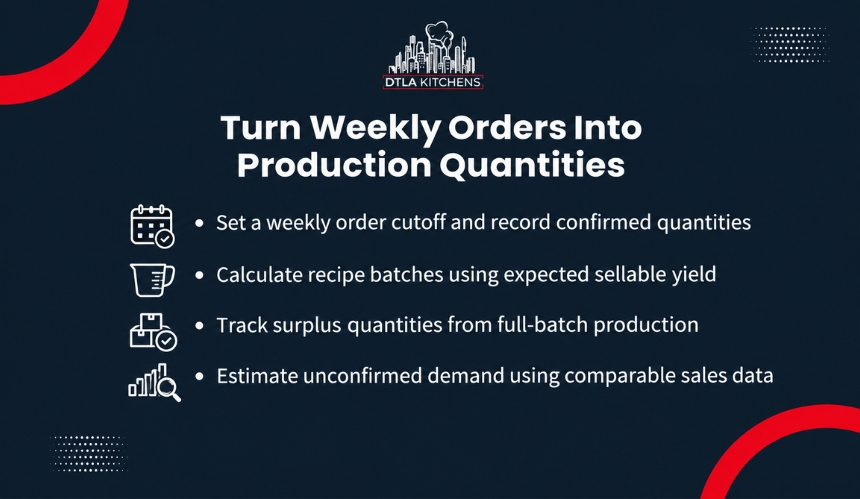
Start with a product-by-product quantity sheet for the coming week. Separate confirmed orders from forecast sales so each planned batch has a clear purpose before kitchen hours are assigned.
Set an Order Cutoff for Each Production Week
Choose a cutoff that leaves enough time to finalize quantities and obtain ingredients before the first session. Record each confirmed order by product, quantity, and fulfillment date so orders due on different days remain distinguishable.
Treat requests received after the cutoff as additions requiring a capacity check. Adding them automatically can change batch requirements after the week’s workload has already been agreed.
Convert Confirmed Orders Into Recipe Batches
Divide the required units by the recipe’s expected sellable yield to determine the number of batches. For example, 96 ordered portions from a recipe that yields 24 sellable portions require 4 batches.
If the calculation results in a partial batch, confirm whether the recipe can be scaled reliably. If full batches are necessary, record the expected surplus separately instead of counting it as ordered output.
Set a Controlled Allowance for Unconfirmed Demand
For market stalls or other sales without advance orders, use recent sales from comparable trading days to estimate additional quantities. Keep this forecast separate from committed orders so the business can see how much production depends on uncertain demand.
Account for any surplus already created by full-batch rounding before adding more. Limit the allowance by the product’s usable selling period and avoid applying the same extra percentage to every item.
Schedule Kitchen Sessions Around Fulfillment Deadlines
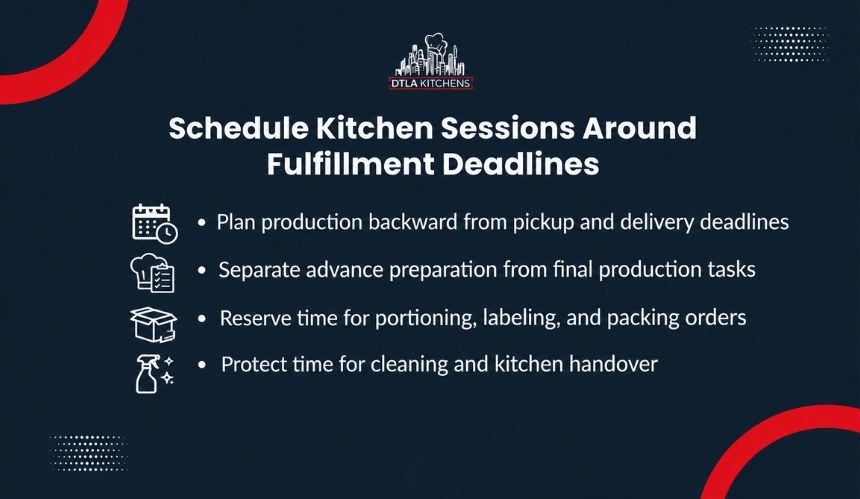
Assign each production quantity to a kitchen session based on when the order must be ready. Build a timeline with clear start and finish times so work due later does not delay earlier collections.
Work Backward From Collection and Delivery Times
Start with the required pickup time or delivery departure, then work backward through packing, cooling, cooking, and preparation. This establishes when production must begin, rather than assuming every order can fit into the next available booking.
For businesses coordinating weekly orders in Los Angeles, kitchen sessions need to align with their collection and delivery schedules. Planning work in a part-time kitchen in Los Angeles around those deadlines helps assign each order to a suitable production window.
Did You Know? FDA cooling guidance specifies that cooked foods requiring time and temperature control should cool from 135°F to 70°F within two hours and reach 41°F or below within six hours total. For batches requiring refrigeration before dispatch, include monitored cooling in the production timeline. |
Separate Advance Preparation From Final Production
Place tasks in an earlier session only when ingredients or partly prepared products can be stored appropriately without compromising their usable life or intended quality. Keep finishing tasks closer to fulfillment when freshness or texture depends on timing.
Write down what each earlier session must leave ready for the next one. For example, specify the quantity of ingredients to be weighed or components to be prepared, rather than using a vague instruction such as “prep for Friday.”
Reserve Time for Packing and Kitchen Handover
Give packing a defined place in the schedule, including portioning, labeling, checking order quantities, and arranging completed packages for collection. Set a production finish time that leaves enough room for these tasks before the booking ends.
Then establish a final handover period to clean equipment, return supplies to storage, and clear the workstation. Keep this period protected when assigning batches so the schedule does not depend on cooking until the last rented minute.
Arrange Batches to Prevent Equipment Bottlenecks
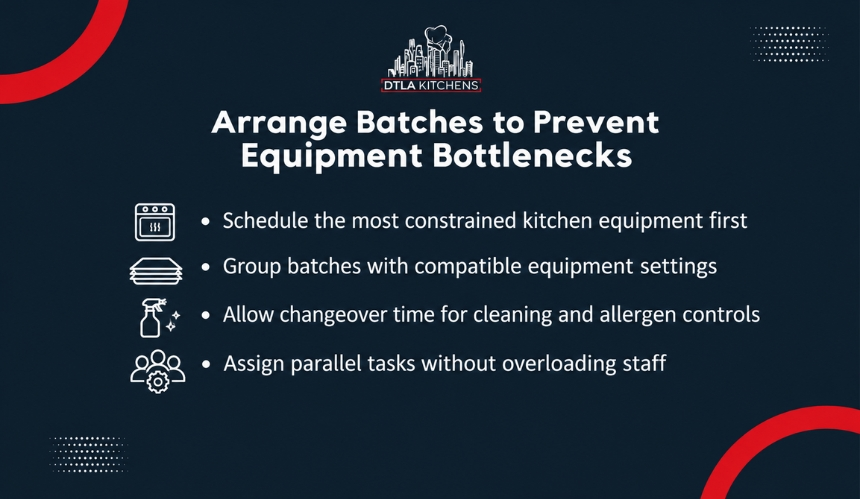
Sequence each session around the equipment that limits how quickly batches can move through production. Give every batch an equipment slot so the planned workload does not require two products to use the same appliance simultaneously.
Schedule the Most Constrained Equipment First
Identify the oven, mixer, or other appliance with the greatest workload relative to its available capacity. Assign its batch slots first, including loading and unloading time, then schedule supporting preparation so each batch is ready when needed.
For example, if one oven holds two trays and the session requires six, the plan needs three oven cycles. Preparing all six trays at once will not shorten those cycles and may leave products waiting longer than intended.
Group Compatible Tasks and Allow for Changeovers
Place batches with compatible equipment settings next to each other where the recipes allow. Products requiring the same oven temperature may run consecutively, reducing time spent adjusting settings and waiting for equipment to reach the next required temperature.
Allow a separate changeover period when switching products requires washing utensils, cleaning surfaces, or changing attachments. Where allergen controls require additional cleaning or separation, include those steps explicitly rather than treating the changeover as immediate.
Assign Parallel Tasks Without Overloading Staff
Use unattended equipment time for tasks that staff can complete while remaining available for required checks. During a timed baking cycle, for example, a worker may weigh ingredients for the next batch if the oven continues to receive proper attention.
Assign a named person to each overlapping task and check for competing demands. Two activities should not run together if both require the same worker’s continuous attention, even when separate equipment is available.
Prepare Ingredients and Supplies for Each Session
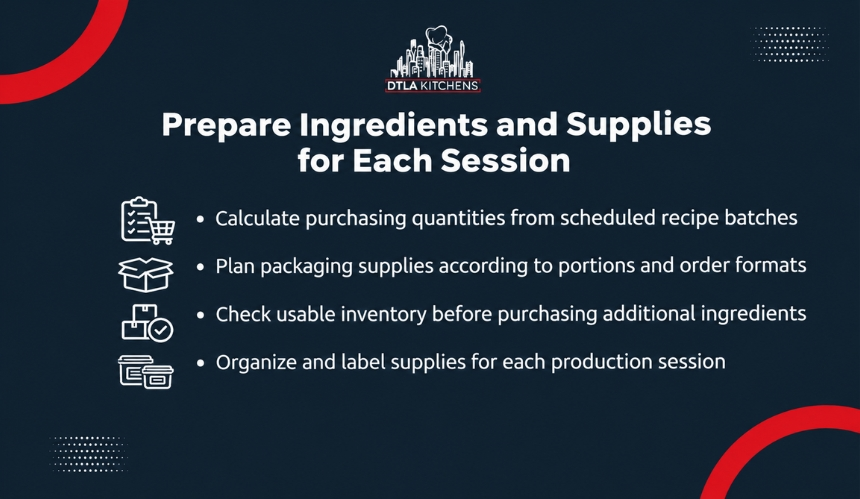
Turn the scheduled batches into a session-specific supply plan. Each booking should have the ingredients and packaging needed for its assigned output, with purchasing and preparation completed before those supplies are required.
Build a Purchasing List From the Final Batch Plan
Multiply each recipe’s ingredient quantities by its scheduled batch count, then combine the ingredients used across products into a single purchasing list. Keep measurement units consistent so quantities can be checked accurately against supplier pack sizes.
Calculate packaging separately using the planned portions and order formats. Include containers, lids, labels, and outer bags where needed, since having enough ingredients does not guarantee that finished orders can be packed completely.
Check Usable Stock Before Ordering
Subtract available, usable inventory from the calculated requirements before placing orders. Count opened packages by their remaining quantity rather than treating them as full, and exclude stock already allocated to another production session.
Check whether ingredients will remain suitable through their intended production date. Record any shortfall early enough to obtain replacements, and confirm supplier availability before relying on an ingredient for the week’s scheduled menu.
Planning Insight: The U.S. Environmental Protection Agency identifies inventory checks and purchasing reductions as practical ways businesses can prevent food waste. For weekly production, an ingredient’s purchase quantity should reflect the batch requirement minus usable stock, rather than repeating the previous week’s order. |
Stage Supplies by Production Session
Group supplies according to the session in which they will be used. Mark each group with its production date and assigned products, keeping refrigerated and frozen ingredients in appropriate storage until needed.
Create a brief session sheet showing what must be brought, what is already stored at the kitchen, and the quantities allocated to that booking. This prevents the first session from accidentally using supplies reserved for later in the week.
Adjust the Next Week’s Plan Using Actual Results
Review the completed week before assigning the next one’s workload. Use recorded differences between the plan and actual production to make specific changes to session timing, batch quantities, and available capacity.
Compare Planned and Actual Batch Times
Record actual start and finish times for each production stage, noting the cause of any delay. Distinguish between a one-off interruption and a task that consistently requires more time than the schedule allows.
Update the affected time allowance instead of automatically extending every session. If portioning repeatedly takes 30 minutes instead of the planned 20, use the measured duration when calculating the following week’s workload.
Record Yield Differences and Unsold Output
Track sellable units produced separately from units sold. A batch yielding fewer portions than expected points to a production or portioning issue, while unsold finished products suggest that forecast demand exceeded actual sales.
Use those findings to adjust the correct part of the plan. Revise expected recipe yields when output consistently differs, and reduce forecast quantities for products with recurring leftovers rather than cutting production for confirmed orders.
Rebuild the Schedule When Kitchen Time Is Lost
If a booked session is shortened or canceled, identify which unfinished tasks affect the earliest fulfillment deadline. Move those tasks into confirmed alternative access first, then recalculate the time available for the remaining orders.
Record the revised production and fulfillment dates against each affected order. Where alternative access cannot support the original deadline, communicate the change before proceeding so customers receive a clear, achievable commitment.
For food startups in Los Angeles, a weekly production plan becomes actionable when the required sessions can be booked around order deadlines. Sharing preferred production days, expected session lengths, and fulfillment times with the kitchen operator helps establish which recurring slots fit the plan.
Ready to put your weekly schedule into practice? Contact DTLA Kitchens to discuss part-time availability and coordinate kitchen bookings with your production calendar.
Frequently Asked Questions
A weekly production sheet should list production dates, product names, batch counts, target quantities, task start times, assigned workers, and fulfillment deadlines. Add a space for actual results and notes. Keep the sheet accessible during each session so staff can follow the current plan and record changes.
Test the product in a separate development slot before including it in committed order production. Measure its preparation time, equipment use, and finished yield. Use those results to assign a realistic production allowance, then introduce a limited quantity without disrupting the established schedule for existing products.
Leave a measured buffer for normal variation instead of scheduling every minute against expected output. Base that allowance on observed delays, such as slower portioning or equipment warm-up. Keep it separate from planned cleanup time, and review its size as the team gathers more reliable timing records.
Maintain a single current version of the production schedule and record when it was last updated. Assign one person to approve changes, then notify everyone whose tasks are affected. Remove outdated printed copies or clearly mark them so workers do not prepare different quantities based on conflicting instructions during the session.
Confirm holiday kitchen access and customer collection dates before opening that week’s orders. Publish any earlier ordering deadline and offer only quantities that fit the shortened schedule. If necessary, temporarily reduce the menu to reduce the number of product variations that need to be completed within the available sessions.