
- DTLA Kitchens
How Bakery Kitchens Support Wholesale Pastry Production
Key Takeaways
- Choose a bakery kitchen with commercial-grade equipment such as dough sheeters, mixers, ovens, and refrigeration systems to handle high-volume wholesale pastry production.
- Standardize recipes and production procedures to maintain consistent pastry weight, texture, appearance, and quality across recurring wholesale orders.
- Organize kitchen workflows into dedicated production zones for dough preparation, proofing, baking, cooling, and packaging to reduce handling delays and production bottlenecks.
- Maintain food safety and traceability controls through proper sanitation, allergen management, ingredient tracking, and documented production batches.
- Match kitchen rental capacity to wholesale demand by evaluating equipment availability, storage requirements, production schedules, and operating costs before expanding operations.
Wholesale pastry production requires more than increasing batch sizes. Bakeries supplying cafés, restaurants, and retailers must maintain consistent pastry quality while managing tight production schedules, temperature-sensitive dough, and recurring bulk orders. Limited oven capacity, inadequate refrigeration, and inefficient preparation areas can disrupt output and delay deliveries.
Purpose-equipped bakery kitchens address these constraints through commercial-grade equipment, controlled production environments, and organized workflows. This blog explains how bakery kitchens support consistent, efficient, and scalable wholesale pastry production.
Why Wholesale Pastry Production Requires a Specialized Bakery Kitchen
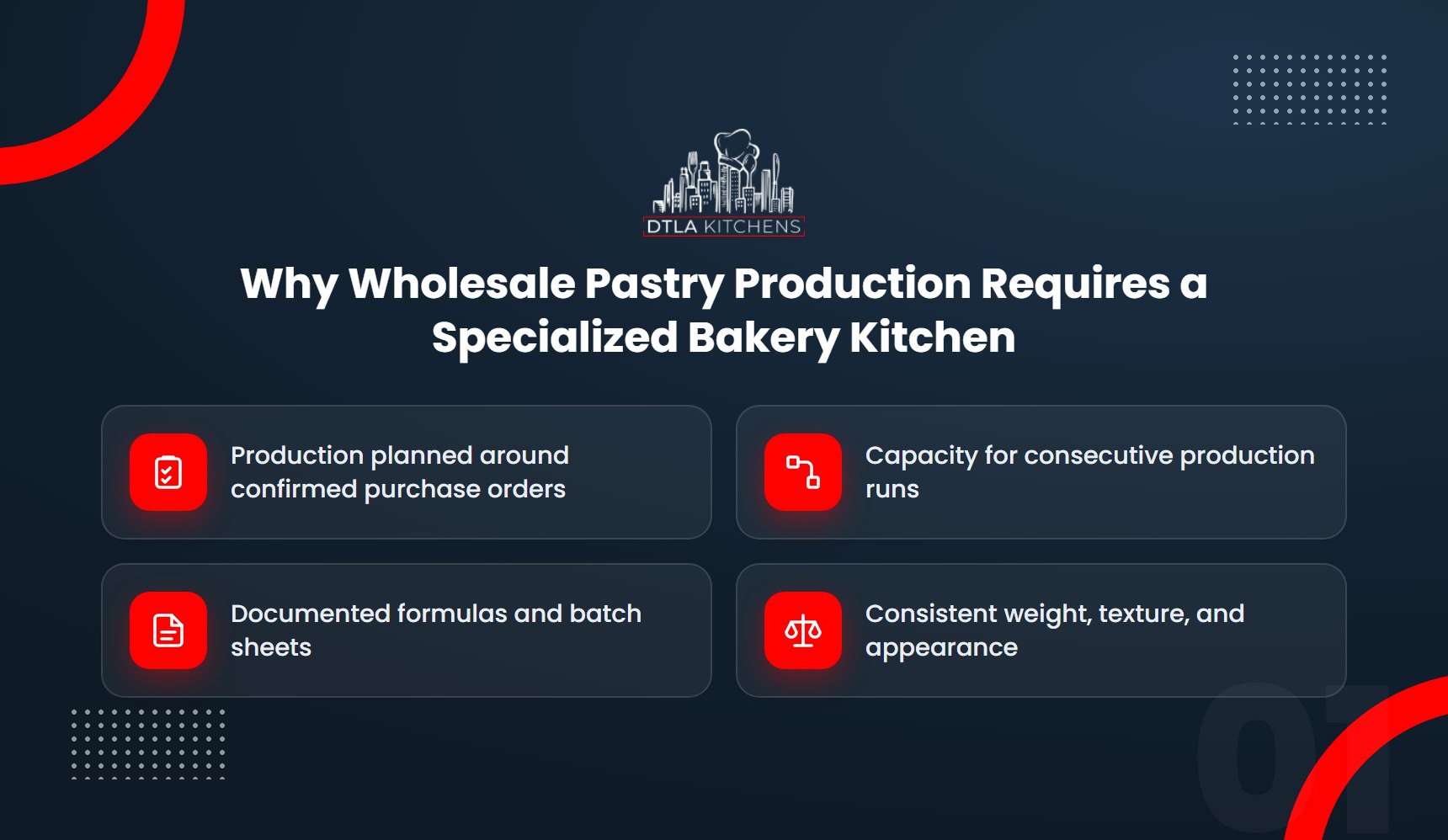
Wholesale pastry production involves recurring orders with fixed quantities, product specifications, and delivery deadlines. Unlike retail baking, where daily output can fluctuate with customer demand, wholesale operations require predictable production cycles and consistent results across multiple batches.
Managing Larger Production Volumes and Repeat Orders
Wholesale pastry suppliers must calculate production quantities against confirmed purchase orders, expected yield, and available preparation time. A single commercial order may require hundreds of croissants, Danish pastries, or puff pastry products within a defined dispatch window. Production planning must account for dough preparation, resting periods, shaping, proofing, and baking without allowing one stage to delay subsequent batches.
A specialized bakery kitchen accommodates these requirements by providing sufficient working capacity for consecutive production runs. Bakers can organize ingredient quantities, assign preparation windows, and maintain separate batches at different stages of completion. This arrangement reduces interruptions caused by restricted workspace and allows recurring wholesale orders to follow predictable production schedules.
Maintaining Consistent Pastry Quality Across Batches
Wholesale buyers expect pastries to meet established specifications for weight, dimensions, texture, and appearance across deliveries. Small variations in dough hydration, ingredient temperature, or fermentation time can alter pastry structure and finished yield. Laminated products are particularly sensitive because inconsistent butter distribution and dough thickness can produce uneven layers, butter leakage, or restricted oven spring.
Bakery kitchens support standardized production by allowing bakers to follow documented formulas, control ingredient measurements, and maintain repeatable processing conditions. Batch sheets can record dough temperature, mixing duration, portion weights, and proofing parameters to identify deviations before baking. These controls reduce rejected products, improve usable yield, and maintain the consistency wholesale customers require.
How Bakery Kitchen Equipment Supports High-Volume Pastry Production
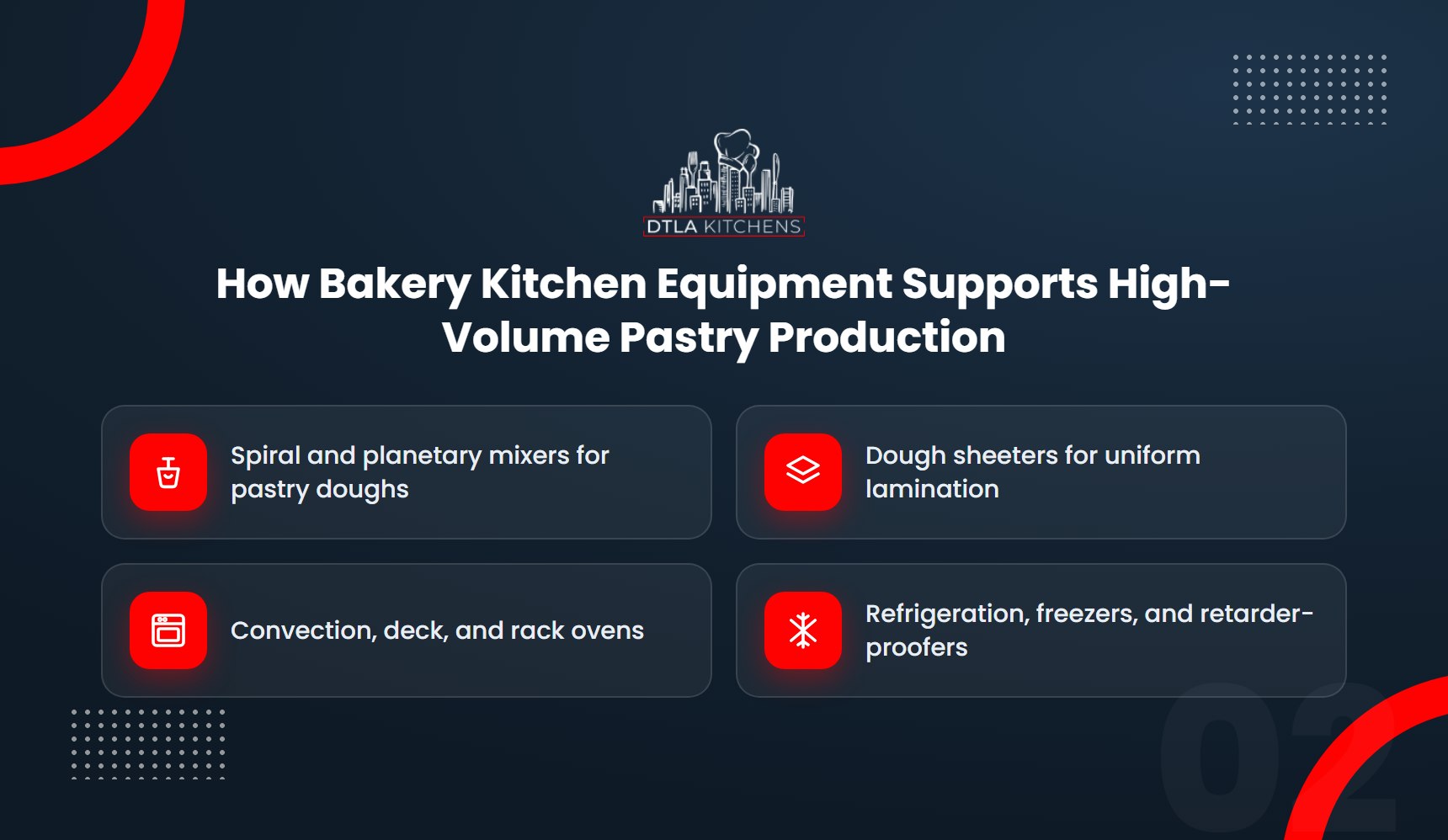
Commercial bakery equipment determines how efficiently ingredients move through mixing, dough processing, baking, and temperature-controlled holding. Equipment capacity and technical specifications must match pastry types and production requirements to prevent processing limitations.
Commercial Mixers, Dough Sheeters, and Preparation Stations
Commercial planetary and spiral mixers handle different dough formulations based on hydration, gluten development, and mixing intensity. Spiral mixers are commonly suited to yeast-based pastry doughs because their mixing action supports gluten development while limiting excessive mechanical stress. Planetary mixers accommodate batters, fillings, creams, and smaller specialty preparations through interchangeable attachments.
Dough sheeters use adjustable roller gaps to produce uniform pastry sheets, particularly for croissants, Danish pastries, and puff pastry. Consistent sheeting thickness supports controlled lamination and reduces manual rolling variations. Stainless steel preparation stations provide dedicated surfaces for folding, cutting, and shaping, while sufficient bench space prevents partially processed dough from accumulating between equipment cycles.
Commercial Ovens and Baking Capacity
Commercial convection, deck, and rack ovens serve different pastry production requirements. Convection ovens circulate heated air around baking trays, making them suitable for many cookies, turnovers, and individual pastries. Deck ovens provide controlled baking surfaces and independently adjustable chambers, while rack ovens accommodate larger quantities through rotating or stationary multi-tray configurations.
ENERGY STAR reports that certified commercial ovens are approximately 30% more energy-efficient than standard models. For wholesale pastry producers running multiple baking cycles, energy-efficient equipment can reduce operating costs without sacrificing production capacity.
Oven selection also affects production throughput, energy consumption, and baking uniformity. Operators must consider tray dimensions, chamber recovery time, airflow, and available loading capacity rather than relying solely on the number of trays an oven holds. Overloading can restrict heat circulation, resulting in uneven browning or incomplete baking. Matching oven specifications to product characteristics supports reliable baking cycles without unnecessary rework.
Refrigeration, Freezers, and Temperature-Controlled Storage
Pastry production requires different temperature conditions for ingredients, prepared dough, and finished components. Refrigerated storage keeps butter, dairy-based fillings, and perishable ingredients within appropriate food-safe temperature ranges. For laminated dough, controlled chilling also maintains butter plasticity between folding stages, reducing the risk of fat smearing into the dough layers.
Commercial reach-in refrigerators, walk-in coolers, and freezers accommodate different storage volumes and holding periods. Retarder-proofers provide additional control over fermentation by regulating temperature and humidity during scheduled dough development. Properly sized refrigeration equipment must account for airflow, product spacing, and cooling loads, since placing excessive quantities of warm dough into a refrigerator can delay temperature reduction and compromise processing conditions.
How Bakery Kitchen Layouts Improve Wholesale Pastry Workflows
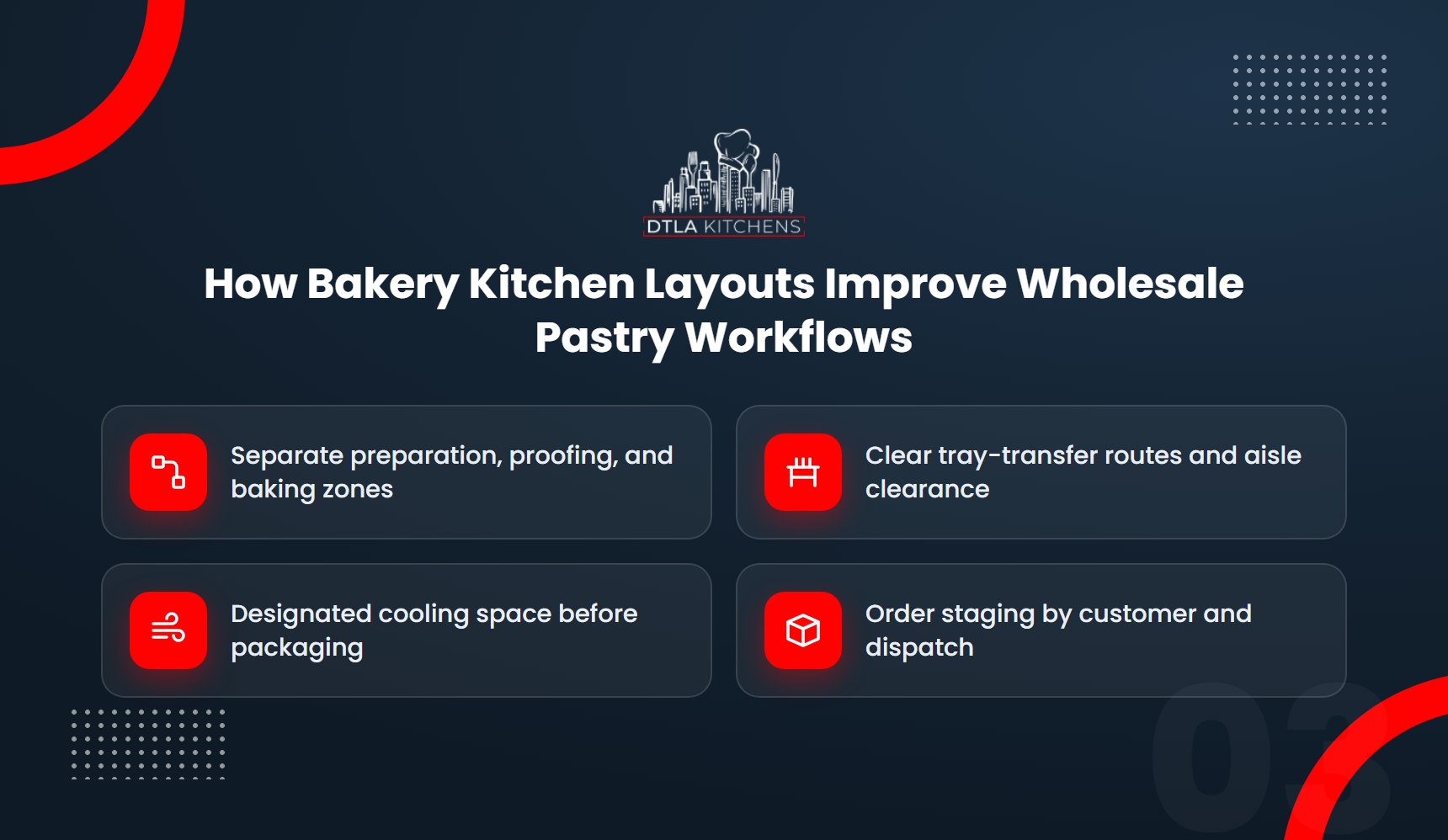
Bakery kitchen layouts influence production efficiency by determining how ingredients, equipment, and finished pastries move between processing areas. A well-planned layout minimizes unnecessary movement, prevents congestion between workstations, and maintains an orderly production sequence from raw dough to packaged orders.
Separating Dough Preparation, Proofing, and Baking Areas
Wholesale pastry kitchens benefit from clearly designated zones for ingredient preparation, dough processing, proofing, and baking. Each stage has different operational requirements. Dough preparation needs accessible ingredient stations and sufficient handling space, while proofing requires protection from uncontrolled temperature fluctuations and excessive air movement. Separating these activities prevents equipment traffic and frequent workstation changes from interrupting delicate pastry processes.
The arrangement of production zones should follow the actual processing sequence, with minimal backtracking between stations. For example, croissant dough can move from the sheeting area to shaping tables, then into proofing equipment before reaching the oven loading station. Adequate aisle clearance and dedicated tray-transfer routes allow employees to transport loaded racks without obstructing active workstations. This reduces handling delays and limits accidental damage to shaped pastries.
Organizing Cooling, Packaging, and Order Staging
Freshly baked pastries require designated cooling space before packaging because residual heat releases moisture that can accumulate inside containers. Excess condensation can soften crisp pastry surfaces, weaken laminated textures, and affect the appearance of glazed products. Commercial bakery layouts accommodate cooling racks with sufficient air circulation while keeping exposed products away from raw ingredient handling and unnecessary employee traffic.
The FDA’s 2022 Food Code specifies that cooked foods requiring time and temperature control for safety must generally cool from 135°F to 70°F within two hours and reach 41°F within six hours total. Wholesale pastries containing certain perishable fillings may require monitored cooling procedures before refrigerated storage.
Packaging stations should be positioned downstream from cooling areas, with cartons, liners, labels, and sealing materials accessible without interrupting food preparation. Separate order-staging zones allow packaged pastries to be grouped by customer, product type, and dispatch requirements. Clearly identified staging locations also support accurate order verification, reducing the risk of mixed shipments, missing quantities, and unnecessary handling before wholesale collection or delivery.
How Bakery Kitchens Support Food Safety and Wholesale Quality Standards
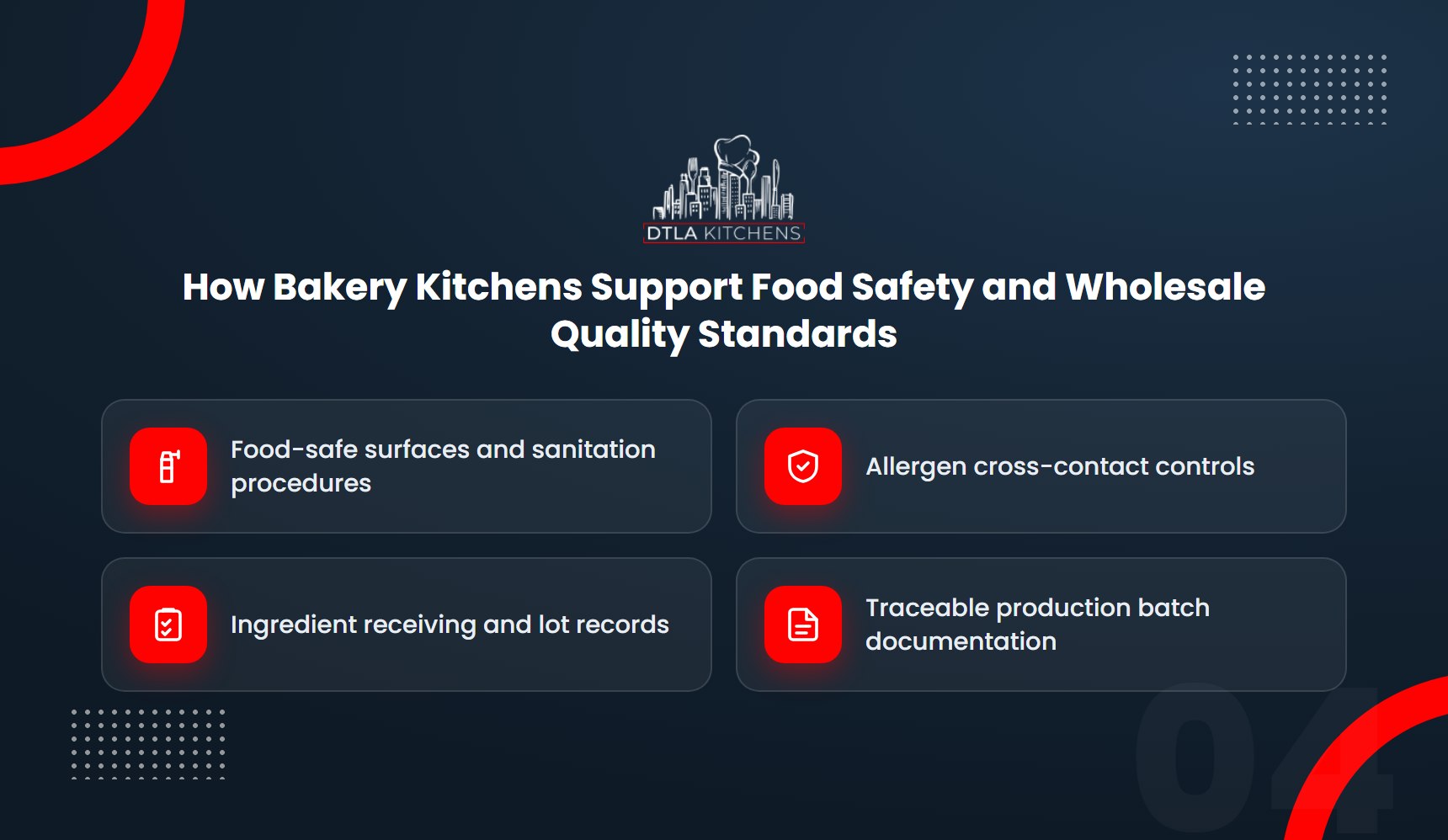
Wholesale pastry suppliers must maintain food safety controls that protect products throughout preparation, handling, and storage. Commercial bakery kitchens provide the infrastructure needed to implement sanitation procedures, manage allergen risks, and maintain production records that support regulatory compliance and buyer requirements.
Food-Safe Surfaces, Sanitation, and Cross-Contact Controls
Commercial bakery kitchens use nonabsorbent, cleanable food-contact surfaces that withstand repeated washing and sanitizing. Stainless steel worktables, accessible equipment components, and dedicated handwashing facilities support hygienic production. Sanitation procedures must address food residue inside mixer attachments, dough sheeter rollers, cutting tools, and other equipment where flour, fats, and fillings can accumulate between production runs.
Since January 2023, the FDA has recognized sesame as the ninth major food allergen under the FASTER Act. Wholesale bakeries producing sesame-containing pastries must account for this requirement in applicable packaged-food labels, making ingredient verification particularly relevant when supplying multiple retail buyers.
Allergen management requires particular attention because wholesale pastries frequently contain wheat, milk, eggs, tree nuts, and other regulated allergens. Shared equipment can transfer allergenic residues between recipes unless manufacturers establish effective cleaning procedures and verify their results. Dedicated utensils, controlled ingredient handling, and documented changeover procedures help limit unintended allergen cross-contact. These controls also support accurate allergen declarations on packaged products.
Ingredient Traceability, Storage, and Batch Records
Wholesale pastry operations require traceability systems that connect incoming ingredients with finished production batches. Ingredient receiving records should identify suppliers, delivery dates, lot numbers, and relevant condition checks. For perishable ingredients, receiving inspections must also verify appropriate temperatures and packaging integrity. Stock rotation procedures, including first-expired, first-out (FEFO) where applicable, reduce the likelihood of using ingredients beyond their approved shelf life.
Production records should connect ingredient lot numbers with manufacturing dates, finished product quantities, and customer distribution details. This information becomes essential when a supplier issues an ingredient recall or a wholesale buyer reports a potential product defect. Traceable batch documentation allows manufacturers to identify affected products, determine their distribution, and initiate targeted corrective actions rather than withdrawing unrelated inventory.
How Bakery Kitchens Help Pastry Businesses Scale Wholesale Orders
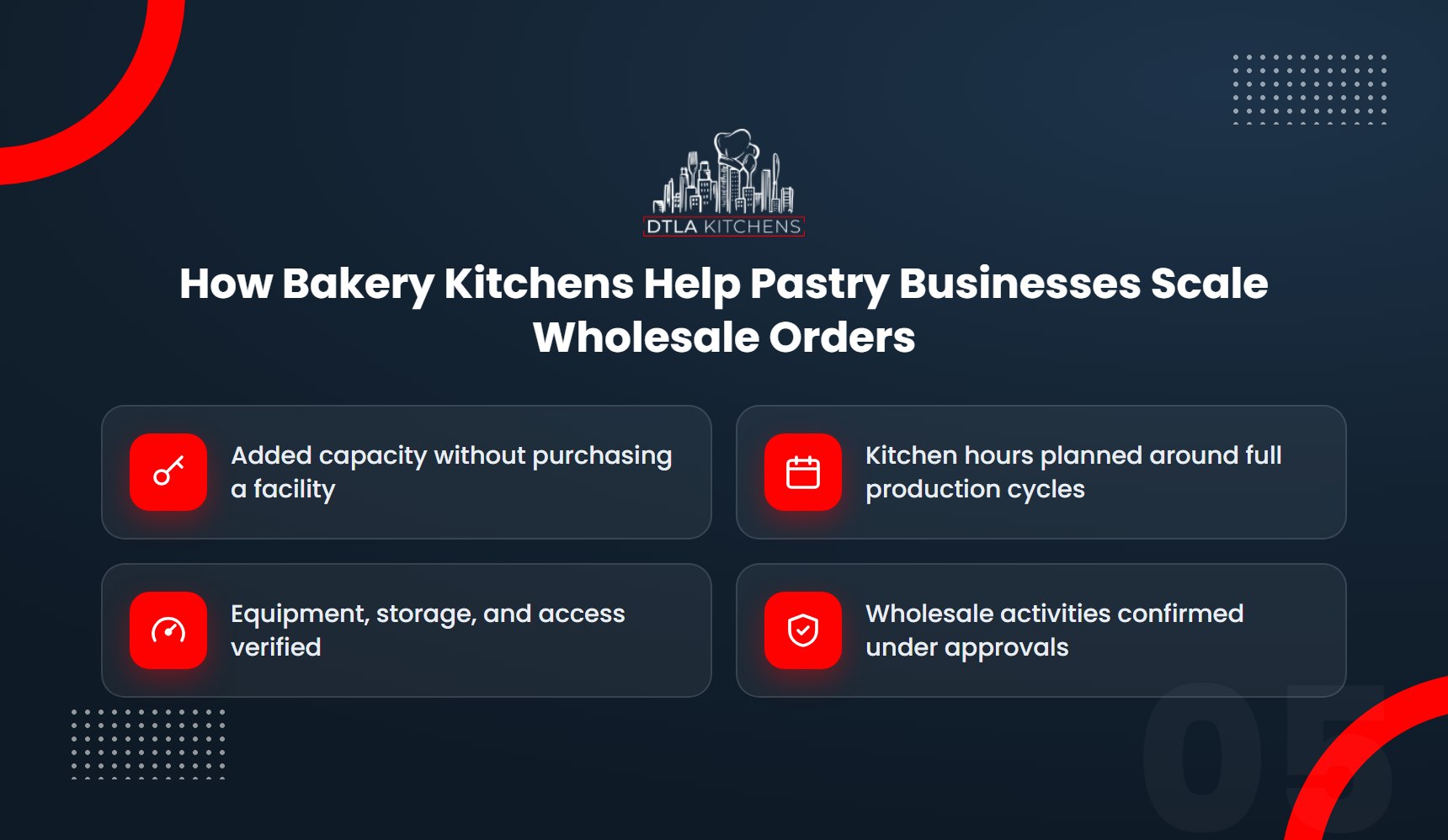
Expanding wholesale pastry production requires sufficient facility capacity without creating unnecessary fixed expenses. Commercial bakery kitchen rentals allow businesses to align production resources with order demand while evaluating equipment access, operating hours, and facility suitability before increasing output.
Increasing Production Capacity Without Purchasing a Facility
Renting a commercial bakery kitchen allows pastry businesses to access production infrastructure without financing an entire facility. Establishing an independent bakery involves expenses for equipment installation, ventilation, utility connections, maintenance, and facility modifications. A rental arrangement can reduce these upfront commitments, although actual savings depend on rental rates, included equipment, storage charges, and operating requirements.
For growing pastry suppliers, the financial advantage depends on how effectively rented capacity converts into saleable output. Businesses can compare kitchen rental expenses against projected wholesale revenue, ingredient costs, labor, and expected production yield. A facility that accommodates existing orders and anticipated volume increases may provide a more practical expansion option than purchasing equipment before sufficient demand exists.
Planning Kitchen Hours Around Wholesale Production Cycles
Wholesale production schedules must account for the complete processing cycle rather than baking time alone. Kitchen reservations should include ingredient preparation, equipment setup, dough processing, required resting periods, baking, cleaning, and facility turnover. Underestimating these activities can create scheduling conflicts, particularly when multiple businesses share the same commercial kitchen.
Pastry producers can calculate required kitchen hours using expected batch quantities, equipment cycle times, and available labor. For example, a supplier preparing pastries for early-morning café deliveries may need overnight kitchen access or an approved arrangement for holding prepared products between sessions. Matching rental availability with actual production requirements prevents scheduling gaps that could affect order fulfillment.
Evaluating Kitchen Suitability for Wholesale Pastry Production
The California Department of Public Health recommends submitting a Processed Food Registration application 30 to 60 days before beginning covered manufacturing activities. For wholesale pastry businesses in Los Angeles, this lead time can affect kitchen rental start dates and the scheduling of initial customer orders.
Not every commercial kitchen can accommodate wholesale pastry manufacturing. Businesses should assess whether the facility supports their specific production methods, required equipment capacity, ingredient volumes, and expected operating frequency. A kitchen suitable for occasional cake preparation may lack the electrical capacity, specialized machinery, or uninterrupted access required for recurring laminated pastry production.
Before selecting a facility, pastry producers should verify the following operational requirements:
- Equipment availability: Access to suitable mixers, ovens, dough-processing equipment, and necessary attachments.
- Production access: Rental hours that accommodate preparation cycles and wholesale delivery commitments.
- Storage arrangements: Sufficient dedicated or approved storage for ingredients, work in progress, and finished products.
- Facility permissions: Confirmation that wholesale food manufacturing is permitted under applicable licenses, permits, and rental agreements.
- Operating costs: Clear terms covering hourly charges, equipment usage, cleaning responsibilities, utilities, and additional storage fees.
For pastry businesses operating in Los Angeles, a dedicated bakery kitchen may provide an alternative to establishing a privately owned production facility. However, operators should confirm that the kitchen’s permitted activities and their own required food-business approvals cover the intended wholesale operations before signing a rental agreement.
Building a Reliable Wholesale Pastry Production Process
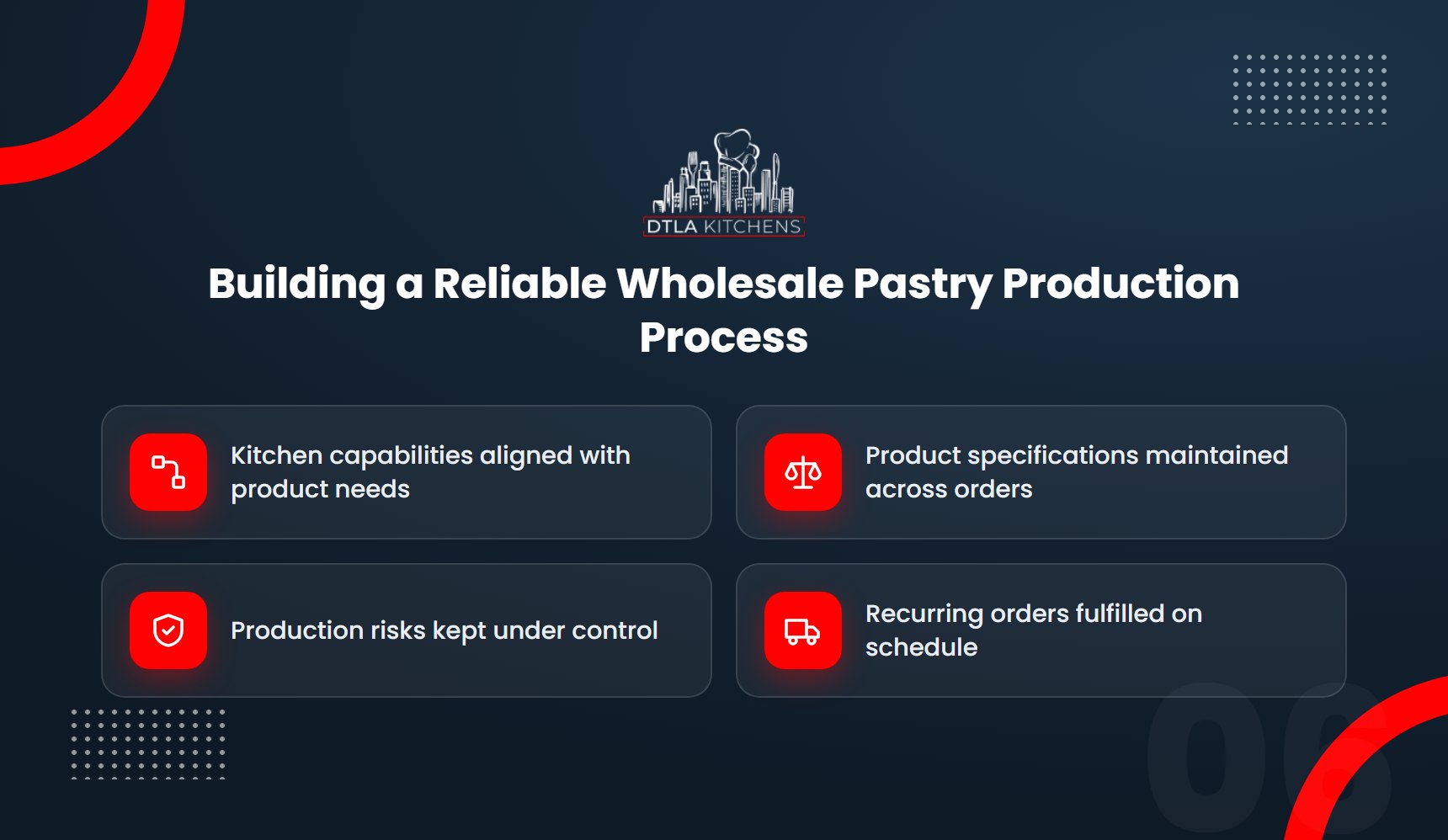
Successful wholesale pastry production depends on aligning kitchen capabilities with product requirements, order quantities, and delivery commitments. A properly equipped bakery kitchen provides the operational foundation for maintaining product specifications, controlling production risks, and fulfilling recurring orders without unnecessary facility investments.
For pastry businesses expanding wholesale operations in Los Angeles, DTLA Kitchens offers bakery kitchen rental options worth exploring. Businesses supplying cafés, restaurants, and retailers can evaluate available facilities against their equipment needs, production schedules, and storage requirements. Choosing a suitable commercial kitchen can support dependable order fulfillment while providing flexibility as wholesale demand grows.
Turn Bigger Pastry Orders Into Business Growth
Struggling to keep up with growing wholesale pastry orders? DTLA Kitchens offers flexible Bakery Kitchen, Shared Kitchen Rental, and Full-Time Kitchen options for pastry businesses across the Greater Los Angeles area. Find a production space that fits your baking schedule, equipment needs, and expansion goals. Contact DTLA Kitchens today to explore the right kitchen rental solution for your wholesale pastry business.
Frequently Asked Questions
Small bakeries can fulfill wholesale orders through licensed shared or rental kitchens, provided the facility permits the intended food manufacturing activities. Producers should verify minimum rental commitments, business licensing requirements, and whether multiple production sessions can be reserved consistently. Wholesale buyers may also request proof of insurance, food safety documentation, and reliable delivery arrangements.
Preparation windows depend on pastry formulation, moisture content, fillings, and storage conditions. Unbaked laminated dough can sometimes be refrigerated or frozen for later processing, while baked pastries may lose crispness during prolonged storage. Producers should establish validated holding periods through product testing rather than applying one universal shelf-life estimate across different pastries.
Freezing before baking can preserve freshly baked characteristics when the dough formulation and freezing process support it. Freezing fully baked products may simplify fulfillment but can affect texture after thawing. The appropriate method depends on pastry type, filling stability, freezer performance, and whether wholesale customers have equipment for final baking.
Wholesale pastry businesses in Los Angeles may require appropriate food manufacturing registration or licensing, depending on their products, activities, and regulatory jurisdiction. California Department of Public Health oversight can apply to processed food manufacturing, while certain operations fall under local health authorities. Producers should confirm applicable approvals with regulators before beginning commercial distribution.
Minimum order quantities should reflect production setup costs, ingredient purchasing requirements, labor efficiency, packaging expenses, and delivery economics. Bakers can calculate the contribution margin per pastry and determine the smallest order that covers order-specific costs while meeting profit targets. Different pastry varieties may require separate minimums because preparation complexity and ingredient costs vary.
Wholesale pastry production generally involves selling baked products in bulk to businesses for resale or foodservice use. Private-label manufacturing produces pastries marketed under another company's brand. Private-label arrangements may require additional packaging specifications, labeling approvals, recipe ownership agreements, and quality documentation, depending on the buyer's requirements and contractual terms.
Pastry transport requires packaging that limits movement, compression, and moisture exposure. Rigid trays, compartmented containers, and suitable protective inserts help preserve delicate decorations and laminated structures. Products containing perishable fillings may require refrigerated transportation. Delivery procedures should also account for vehicle loading, route duration, stacking limits, and temperature monitoring where necessary.