
- DTLA Kitchens
What Makes a Kitchen Studio Useful for Food Content?
Key Takeaways:
|
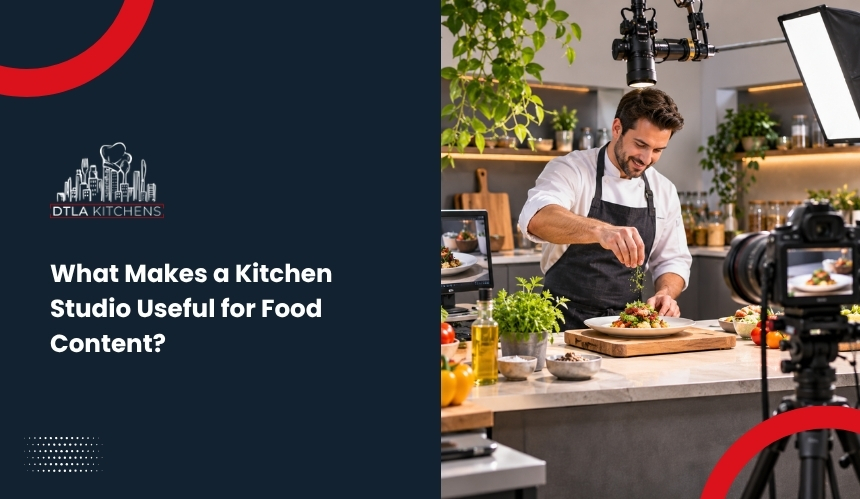
A kitchen studio becomes valuable for food content when the space supports cooking, styling, lighting, and filming without forcing the production team to work around residential-layout limitations. Poor camera access, inconsistent lighting, limited prep space, and equipment constraints can slow shoots and reduce visual consistency.
A well-designed kitchen studio removes those production barriers by combining functional cooking infrastructure with a controlled content environment. This blog explains the features that make a kitchen studio practical for food photography, recipe videos, branded content, and commercial food production.
Why Is a Kitchen Studio Better Suited to Food Content Production?
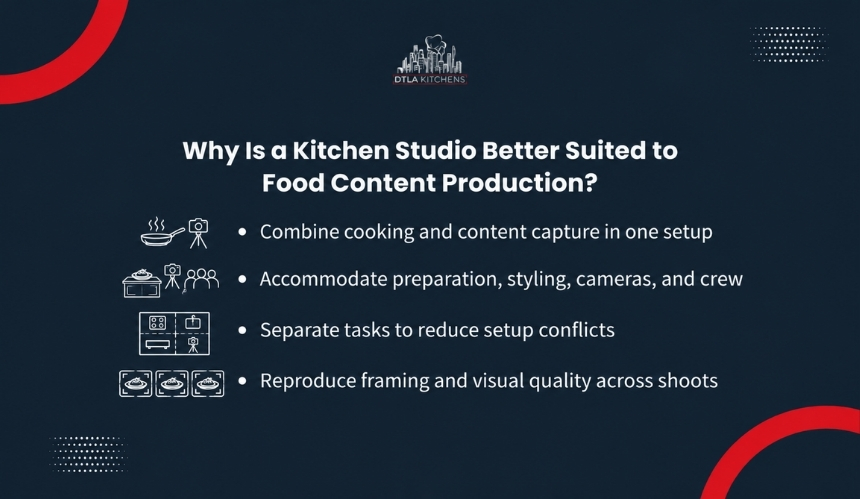
A kitchen studio is better suited to food content production because it combines a working kitchen with a space designed around camera access, controlled presentation, and repeatable production conditions. That combination allows cooking and content capture to happen within the same operational setup.
Unlike a standard residential kitchen, a purpose-built studio can accommodate food preparation, styling, lighting equipment, cameras, and crew without forcing each task into the same limited area. This separation reduces setup conflicts and gives creators more control over how each scene is staged and captured.
The main advantage is production consistency. When work surfaces, equipment placement, lighting positions, and shooting areas remain predictable, teams can reproduce similar framing and visual quality across multiple recipes, campaigns, or filming days. That makes a kitchen studio particularly useful for projects where brand consistency and repeatable output matter.
Which Visual Features Make a Kitchen Studio Useful on Camera?
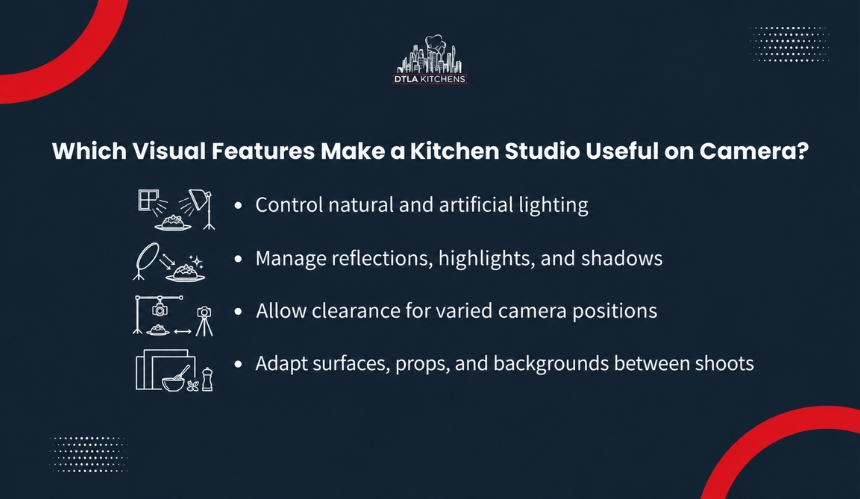
A kitchen studio must do more than function well for cooking. Its visual environment should give creators control over light, composition, background elements, and camera placement so the final footage or photography can be shaped intentionally rather than dictated by the room.
How Does Controllable Lighting Improve Food Imagery?
Food is highly sensitive to lighting because texture, color, moisture, steam, and surface detail can change dramatically depending on light direction and intensity. A useful kitchen studio allows creators to manage both natural and artificial light, including window exposure, overhead fixtures, LED panels, softboxes, and reflectors.
A 2016 SMPTE technical study found that traditional CRI ratings cannot reliably predict how LED lighting will reproduce color through a digital camera because CRI is based on human vision. Modern cinematography therefore uses camera-focused measures such as Spectral Similarity Index to assess how predictably colors will appear on screen. |
Control over brightness and shadow also reduces problems such as harsh reflections on cookware, blown highlights on glossy foods, or flat-looking plated dishes. For video production, stable lighting is especially valuable because exposure and color temperature can remain uniform throughout a sequence.
Why Do Camera-Friendly Layouts Matter?
A camera-friendly layout provides enough clearance to position tripods, sliders, overhead rigs, and lighting stands without obstructing cooking activity. This gives the production team more freedom to capture wide kitchen scenes, close-up preparation shots, overhead recipe footage, and presenter-led demonstrations.
Distance between the camera and subject also affects lens choice and perspective. More working room allows creators to control framing rather than relying on ultra-wide lenses that can distort counters, appliances, or people near the edges of the image.
How Do Adaptable Surfaces and Backgrounds Support Different Shoots?
Countertops, tables, walls, backsplashes, and movable backdrops influence the visual identity of food content. A flexible studio can support multiple styles by allowing creators to change surfaces, props, table settings, or background elements without rebuilding the entire set.
This adaptability is useful when producing content for different brands or campaigns. A neutral preparation scene can be converted into a polished product setup, rustic recipe environment, or clean commercial composition while keeping the core production space unchanged.
What Kitchen Features Support Cooking During a Content Shoot?
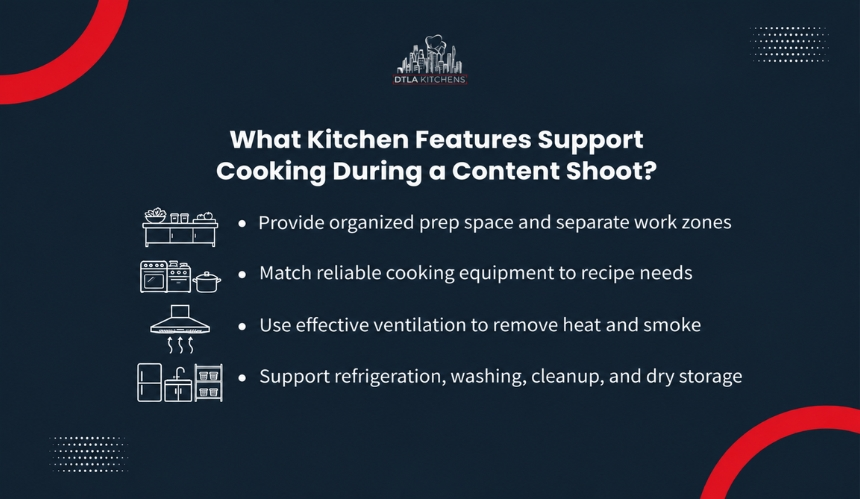
A food-content studio must support real cooking conditions, not just staged visuals. Reliable prep areas, commercial-grade cooking equipment, and proper storage allow recipes to be produced on-site without interrupting the shoot or compromising ingredient quality.
Why Do Prep Space and Work Surfaces Matter?
Adequate prep space keeps raw ingredients, cookware, finished dishes, garnishes, and styling materials organized during production. When work surfaces are limited, teams are forced to clear and reset the same area repeatedly, which increases handling time and raises the risk of cross-contamination or damaged presentation.
Separate counters or preparation zones also allow multiple tasks to happen simultaneously. A chef can continue preparing the next recipe while a food stylist finishes plating another dish, keeping production moving without creating unnecessary congestion.
What Cooking Equipment and Ventilation Are Needed?
The required equipment depends on the content being produced, but a capable kitchen studio should provide dependable ovens, ranges, burners, and other appliances that match the recipes being filmed. Equipment reliability matters because inconsistent heat output or limited appliance capacity can alter cooking times, texture, and final appearance.
Ventilation is equally important when frying, searing, roasting, or producing steam. Effective extraction removes heat, smoke, grease, and odors from the workspace, reducing the chance that airborne residue or excessive heat will interfere with food preparation or production equipment.
How Do Refrigeration, Sinks, and Storage Support Production?
Refrigeration protects temperature-sensitive ingredients before they are used and preserves prepared items between takes. Access to cold storage is especially important when a shoot involves dairy, meat, seafood, desserts, or multiple recipes that cannot remain at room temperature for extended periods.
Sinks support washing, sanitation, and rapid cleanup between preparation stages, while dry storage keeps ingredients and production supplies accessible without cluttering active work areas. Together, these facilities create a more controlled food-handling process and reduce avoidable interruptions during longer shoots.
The FDA Food Code sets cold holding for time-and-temperature-controlled foods at 41°F or below and hot holding at 135°F or above. For longer food shoots, reliable temperature control between preparation and takes protects more than appearance; it supports recognized food-safety practices while ingredients and finished dishes remain on set. |
How Does a Kitchen Studio Improve the Food Content Workflow?
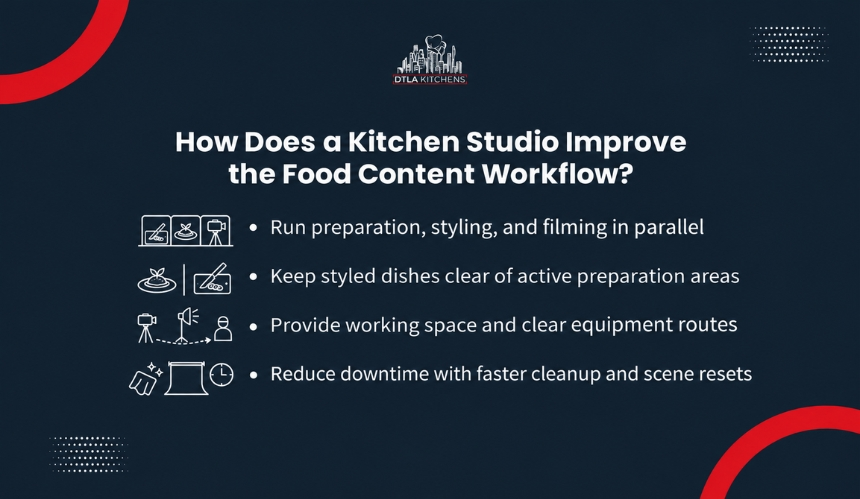
A kitchen studio improves workflow by reducing movement conflicts between cooking, styling, filming, and cleanup. When each activity has enough dedicated space, teams can complete tasks in parallel instead of waiting for one area to become available.
Did you know? A well-zoned kitchen studio can reduce production bottlenecks by allowing prep, cooking, styling, and filming to happen at the same time, helping crews capture more usable content within a single shoot day.
How Do Separate Areas for Prep, Styling, and Shooting Improve Efficiency?
Distinct work zones create a cleaner handoff between production stages. Ingredients can move from preparation to cooking, then to plating and final capture without repeatedly crossing through active camera or styling areas.
This layout also protects finished dishes from unnecessary handling. Once a plate is styled for photography or video, it can remain in a controlled area while the next recipe continues elsewhere, reducing accidental disruption to garnishes, sauces, or presentation details.
Why Does Space for Crew and Production Equipment Matter?
Food shoots often involve more than the person cooking. Photographers, videographers, food stylists, presenters, assistants, and clients may need to work around tripods, monitors, cables, microphones, lighting stands, and carts at the same time.
Sufficient floor space gives each role a practical working position and keeps equipment routes clear. This reduces bottlenecks, lowers the chance of cables or stands obstructing movement, and makes coordinated tasks such as live demonstrations or multi-person shoots easier to manage.
How Do Faster Resets Improve Production Output?
Food content frequently requires multiple takes, recipe variations, or scene changes within the same session. A studio that supports quick cleanup, prop changes, ingredient replacement, and surface resets reduces downtime between shots.
Faster resets are especially valuable during batch production. Teams can move from one recipe, product, or branded setup to the next with fewer interruptions, increasing the amount of usable content produced within the available shoot window.
What Types of Food Content Benefit Most From a Kitchen Studio?
A kitchen studio is most useful for content that requires active food preparation, controlled presentation, or repeatable production conditions. The strongest fit is usually content where both the cooking process and the finished visual need to be captured professionally.
Important: Choose a kitchen studio based on the production demands of the content, not appearance alone. A visually attractive space can still create problems if it lacks the cooking capacity, camera access, storage, power, or crew space required for the shoot.
Why Are Kitchen Studios Effective for Recipe and Cooking Videos?
Recipe videos benefit from a kitchen studio because the full preparation process can be filmed in one location, from ingredient setup to final plating. This supports instructional formats where viewers need to see chopping, mixing, cooking, assembly, and presentation clearly.
Studios are also well suited to presenter-led demonstrations, step-by-step tutorials, and multi-angle filming. Producers can capture close preparation shots, wider cooking scenes, and finished-dish footage without relocating the production between stages.
How Do Food Photography and Social Media Shoots Benefit?
Food photography often requires precise control over plating, props, composition, and the condition of the food at the moment of capture. A kitchen studio allows dishes to be prepared close to the shooting area, reducing the delay between cooking and photography.
For social media production, this proximity supports efficient creation of reels, short-form videos, recipe clips, product shots, and vertical content during the same session. Creators can produce multiple assets from one preparation cycle instead of rebuilding the setup for each format.
When Are Kitchen Studios Useful for Brand and Commercial Food Shoots?
Commercial shoots often require stricter visual consistency because the content must align with packaging, advertising, campaign guidelines, or established brand standards. A kitchen studio provides a controlled setting where food preparation and visual direction can be coordinated around those requirements.
This is particularly useful for restaurant brands, packaged food companies, cookware manufacturers, ingredient suppliers, and sponsored creator campaigns. The space can support product integration, packaging placement, branded props, and repeatable scenes across a larger content library.
What Should You Check Before Choosing a Kitchen Studio?
The right studio should match the production requirements of the specific shoot rather than simply offering an attractive kitchen setup. Before booking, evaluate whether the space can support the equipment, crew, food preparation, and shot list involved.
Key factors to review include:
- cooking appliances required for the recipes
- usable counter and preparation capacity
- lighting control and available power
- camera access for planned shot angles
- refrigeration and ingredient storage
- floor space for crew and production equipment
- flexibility for changing sets, props, or branded backgrounds
A studio that matches these practical requirements is more likely to support the intended content format without forcing compromises during production.
Ready to create food content in a space built for real production? DTLA Kitchens offers flexible commercial kitchen solutions, including kitchen studios, part-time and full-time kitchens, bakery, ice cream, and kosher kitchen spaces across the greater Southern California area. Find the setup that fits your shoot, production schedule, and food business needs.
Frequently Asked Questions
A professional kitchen studio can still be useful for phone-based content when the limitation is the environment rather than the camera. Stable lighting, controlled sound, reliable cooking infrastructure, and enough working distance can make smartphone footage more consistent. For a solo creator, the rental makes most sense when several recipes or branded assets can be batched into one session.
For dialogue-heavy recipe videos, the room should be quiet enough that extractor fans, refrigerators, HVAC systems, traffic, or neighboring activity do not dominate the recording. Ask whether noisy appliances can be switched off temporarily and whether the space is acoustically treated. Good sound control reduces reliance on aggressive noise reduction during editing.
Many studios count preparation, staging, filming, breakdown, and cleanup within the booked rental window, so usable camera time may be shorter than the headline booking length. Confirm access time, overtime rates, loading rules, and cleaning expectations before scheduling talent or food preparation. A realistic call sheet should reserve time for both setup and reset.
Dry hire generally means renting the studio space and its listed inclusions while bringing your own crew and core production gear. Wet hire adds services such as lighting equipment, technicians, photographers, or a production team. The better option depends on whether you already have technical staff and whether setup complexity justifies additional on-site support.
Check both electrical capacity and connectivity when a shoot uses multiple LED fixtures, monitors, induction appliances, laptops, or livestream equipment. Separate power circuits can reduce overload risk, while reliable high-speed Wi-Fi or Ethernet supports tethered capture, remote client review, and live broadcasting. Ask the studio which outlets and circuits are dedicated to production equipment.
Production requirements can extend beyond the rental fee. Some studios may expect public liability insurance, damage responsibility, or additional approval for larger crews, specialty equipment, open flames, or unusual cooking methods. Review the studio agreement before the shoot and confirm which activities are permitted, because insurance and safety requirements vary by venue and local jurisdiction.