
- DTLA Kitchens
Part-Time Kitchen Checklist for Food Startups
Key Takeaways:
|
Choosing a part-time kitchen requires checking whether the space can support a food startup’s complete production cycle within the booked hours. A suitable rental should provide enough time for preparation, cooking, cooling, packing, and cleanup, as well as access to the equipment and storage required by the menu. Overlooking these details can leave a business paying for extra hours or struggling to finish orders before its session ends.
For food startups comparing rental options in Los Angeles, a part-time kitchen checklist helps identify these limitations before committing. This blog covers the scheduling, equipment, storage, operating requirements, and session costs to review when deciding whether a kitchen fits the business’s production needs and budget.
Check Kitchen Availability Against Your Production Schedule
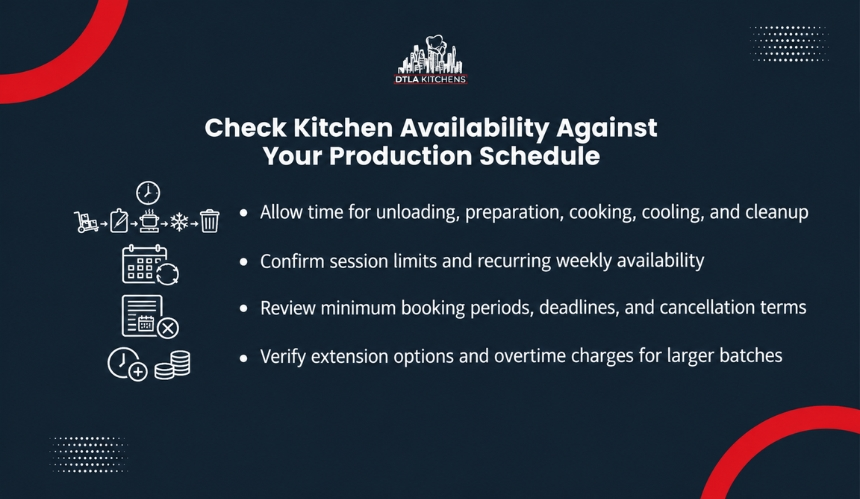
A part-time kitchen checklist should establish whether the available rental hours cover the startup’s complete production cycle. Confirm session limits and recurring availability before committing to a booking schedule.
Check What Must Fit Inside the Booked Hours
| Did You Know? Los Angeles County’s retail food inspection guide specifies that potentially hazardous foods must cool from 135°F to 70°F within two hours, then reach 41°F or below within six hours total. For startups preparing cooked foods for refrigeration, the booking plan should account for monitored cooling and continued access to suitable equipment. |
Verify Access for Recurring Production
Check whether the kitchen can provide the same production slots each week and whether recurring reservations secure those hours. The available sessions should fit the startup’s order preparation and collection schedule.
Review minimum booking lengths, reservation deadlines, and cancellation terms. These details determine whether the business can maintain a workable schedule as order quantities change.
Confirm Arrangements for Longer Production Runs
Ask whether additional hours can be reserved when a larger batch exceeds the usual session. Confirm how extensions are handled, particularly when another renter has booked the following slot.
Check overtime charges and the required handover time before relying on an extension. For larger orders, verify that sufficient kitchen time is available before committing to a completion date.
Check Equipment Access and Capacity Before Booking
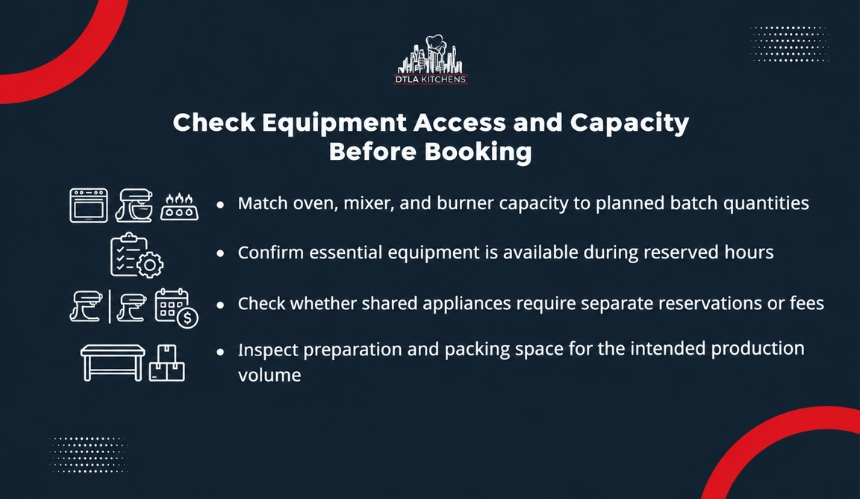
Confirm that the kitchen’s equipment and assigned workspace can handle the startup’s planned batch size within its rented hours. Check appliance capacity, access arrangements, and preparation space before committing to a booking.
Match Equipment Capacity to Planned Batches
Check oven capacity, mixer size, and available burners against the quantities the business intends to prepare. If equipment handles only part of a batch, repeated cooking or mixing cycles may extend production beyond the reserved session.
Food startups comparing rental spaces in Los Angeles should bring their menu and expected batch quantities to the kitchen tour. Evaluating a part-time kitchen in Los Angeles against those details helps determine whether its equipment can support the planned output within the available hours.
Confirm Equipment Availability During Reserved Hours
Ask whether booking the kitchen includes access to every appliance required for production. Some equipment may be shared, reserved separately, or available at an additional charge, so confirm the arrangement before planning a session around it.
Verify how equipment conflicts and breakdowns are handled. If an essential oven or mixer becomes unavailable, clarify whether the operator offers replacement equipment, rescheduling, or a booking credit.
Check the Assigned Preparation and Packing Space
Inspect the workspace allocated to the booking, including room for ingredients, utensils, preparation, and finished-product packing. Confirm that the planned batch fits within that area without relying on another renter’s station.
Ask whether preparation and packing use the same surface. If they do, allow time to clear and clean it between tasks when estimating how much production the session can accommodate.
What Storage and Transport Arrangements Are Included?

Confirm where ingredients, packaging, and finished products can stay during and between bookings. Part-time kitchen access does not necessarily include ongoing storage or permission to receive deliveries outside reserved hours.
Confirm Dry, Refrigerated, and Frozen Storage Allowances
| Research Insight: CDC research on restaurant cooling practices found that one in seven restaurants stored cooling food in refrigerators set above 41°F. When assessing a rental kitchen, startups should check how refrigerator temperatures are monitored, alongside confirming their allocated storage space. |
Plan Deliveries, Loading, and Finished-Product Collection
Check whether ingredient deliveries can be received when the startup is absent, or whether they must arrive during its session. Confirm where supplies can be unloaded and how they reach the assigned preparation or storage area.
Establish when finished orders must leave the facility and where they can wait for collection. For products requiring refrigeration or freezing, verify that suitable holding space remains available until pickup and that the transport arrangement maintains the required conditions.
Which Operating Requirements Must Be Verified Before Booking?
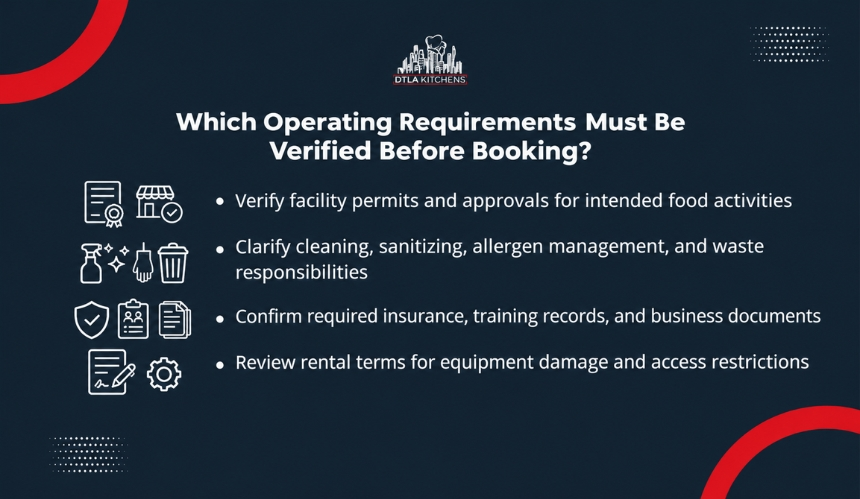
Before committing to a part-time kitchen, clarify which approvals, documents, and food-handling responsibilities apply to the startup. Ask the operator what must be completed before the first production session.
Verify Approvals for the Intended Food Activities
Request the facility’s permit details and confirm with the relevant local authority what the startup needs for its specific products and sales method. Do not assume that renting an approved kitchen automatically authorizes every renter’s business activities.
Describe whether production involves packaged goods, catering orders, or direct customer sales when making these checks. Confirm that the proposed activities are permitted at the facility before paying for recurring kitchen access.
Clarify Food Safety and Cleaning Responsibilities
Establish who cleans and sanitizes shared equipment before use and what the renter must complete before leaving. Ask whether cleaning supplies are provided and whether the operator requires a handover inspection or cleaning record.
Confirm arrangements for separating ingredients, managing allergens, and disposing of waste during the session. These responsibilities should be clear enough for the startup to include the required tasks in its production routine and booked hours.
Review Insurance and Rental Documentation
Ask which insurance documents, training records, and business paperwork the operator requires from renters. Check submission deadlines so missing documentation does not prevent access to a paid session.
Read the agreement for responsibility for equipment damage, incident reporting, and circumstances that allow the operator to suspend access. Confirm that any arrangements discussed during the tour are reflected in the written rental terms.
What Will Each Production Session Actually Cost?
Calculate the complete cost of using the kitchen for the planned batch. The advertised hourly rate is only one part of the calculation if storage, equipment access, or cleaning carries separate charges.
Add Charges Beyond the Advertised Rental Rate
Request a written breakdown of booking fees, minimum rental hours, storage charges, equipment fees, and any required cleaning payments. Distinguish refundable deposits from expenses, and account for the cash required upfront.
Compare rental quotes using the same production hours, equipment access, and storage requirements. This makes differences in total session costs clearer and prevents a lower advertised rate from hiding separately billed essentials.
Calculate Kitchen Cost per Sellable Unit
Divide the total kitchen cost allocated to a session by the number of sellable units produced. For example, a $180 session yielding 120 sellable units adds $1.50 in kitchen costs per unit, before accounting for ingredients, packaging, labor, and delivery.
Use realistic output rather than the equipment’s maximum capacity. Allocate recurring storage or membership fees consistently across sessions so the calculation reflects the rental arrangement’s ongoing cost.
Complete a Trial Session Before a Recurring Commitment
If a trial booking is available, produce a representative batch and record the hours used, sellable output, and actual charges. Include setup and cleanup when checking whether the session stayed within budget.
Compare the results with the original estimate before committing to recurring hours. The trial should establish whether the kitchen supports the required output at a workable cost per batch.
For food startups in Los Angeles, choosing a rental kitchen starts with matching available hours, equipment, storage, and costs to the batches they plan to produce. A walkthrough and a clear breakdown of rental terms can help confirm whether the space meets those needs.
Ready to discuss your production requirements? Contact DTLA Kitchens to ask about part-time availability, review rental options, and arrange a kitchen tour before booking.
Frequently Asked Questions
A weekly production day can work when the kitchen offers recurring access, and the startup can complete its planned output within that session. Before committing, check whether a single weekly booking meets the operator’s minimum rental requirements and whether the same slot remains available for the duration of the agreement.
The number of workers allowed depends on the rental agreement and assigned workspace. Ask whether the booking covers a team or an individual, whether additional workers incur fees, and what onboarding each person needs. Confirm these details before calculating production capacity around multiple employees working together.
Customer pickup depends on the facility’s access rules and permitted activities. Confirm whether renters may arrange collections, where customers can wait, and whether pickups must occur during booked hours. If collection is unavailable, the startup will need another handover arrangement before advertising the kitchen as a pickup address.
Ask the operator how renters should report an unclean workstation or unavailable equipment at arrival. Clarify whether delayed access results in adjusted booking time, a credit, or rescheduling. Record the condition before starting so responsibility for the previous session’s cleanup does not become unclear during the handover.
A menu change may require different equipment, storage conditions, or production permissions from those originally reviewed. Share the proposed changes with the operator before scheduling the new products. Confirm that the rental terms and applicable approvals still accommodate the revised activities, particularly when the preparation process changes substantially.