
- DTLA Kitchens
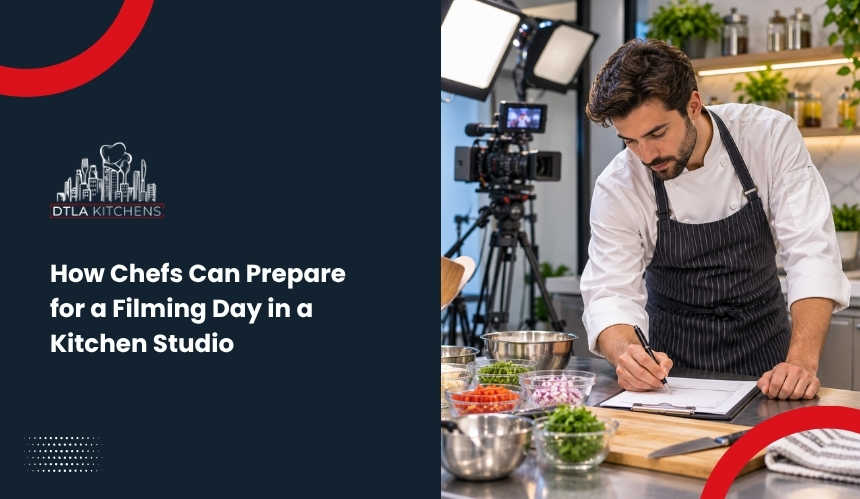
How Chefs Can Prepare for a Filming Day in a Kitchen Studio
Key Takeaways:
|
Plan the Recipe and Filming Sequence Before the Shoot
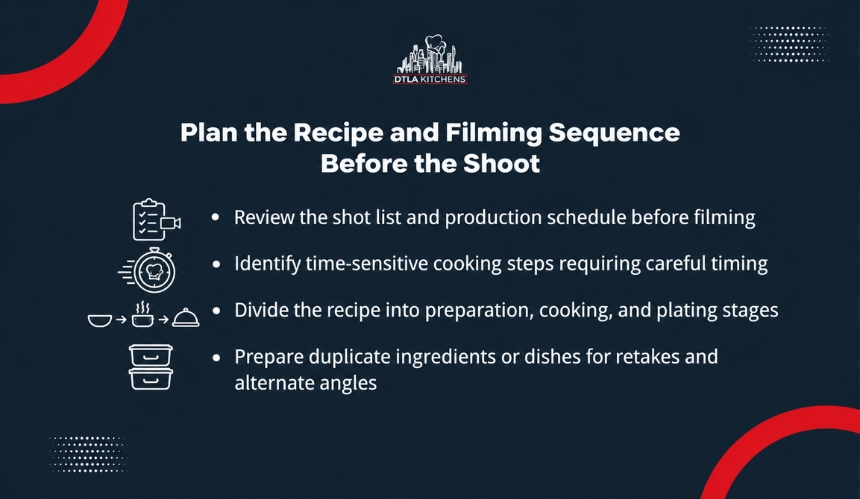
A recipe that works in a normal kitchen may not translate efficiently to a filmed production. Chefs need to map the cooking process to the shoot schedule so each stage can be captured without creating unnecessary resets, delays, or continuity problems.
Did you know? Food video productions often use multiple versions of the same dish at different stages of completion so crews can capture each cooking step without waiting for the entire recipe to be repeated from start to finish.
Review the Shot List and Production Schedule
Before filming begins, the chef should review which recipe actions need to appear on camera and how those shots fit into the production schedule. This determines when ingredients must be ready, which cooking stages require live execution, and where the crew may need additional time for close-ups, alternate angles, or demonstrations.
Timing-sensitive steps such as searing, frying, whipping, melting, or final plating should be identified in advance because they may be difficult to recreate once the ideal visual moment has passed. Aligning the recipe timeline with the shot list allows the cooking process and camera workflow to operate as one coordinated production sequence.
Break the Recipe Into Filmable Stages
A production-ready recipe should be divided into clear visual stages rather than treated as one continuous cooking process. Preparation, active cooking, resting, assembly, garnishing, and plating may each require different camera positions, lighting adjustments, or filming conditions.
This structure also creates controlled pause points where the crew can reposition equipment without affecting food quality. Stable stages can usually tolerate longer production pauses, while heat-sensitive or fast-changing steps should be filmed with minimal interruption to preserve texture, color, and visual continuity.
Prepare Duplicate Ingredients and Recipe Stages
Duplicate ingredients reduce the risk that a missed angle, continuity error, spill, or overcooked component will force the chef to restart a large portion of the recipe. Backup quantities should be planned around the steps most likely to require retakes rather than simply doubling every ingredient.
For longer recipes, chefs can prepare several versions of the dish at different stages of completion. One batch may be ready for an early cooking shot while another is staged for finishing or plating, allowing the production team to move between scenes without waiting for the full cooking process to repeat.
Organize Ingredients, Tools, and Mise en Place
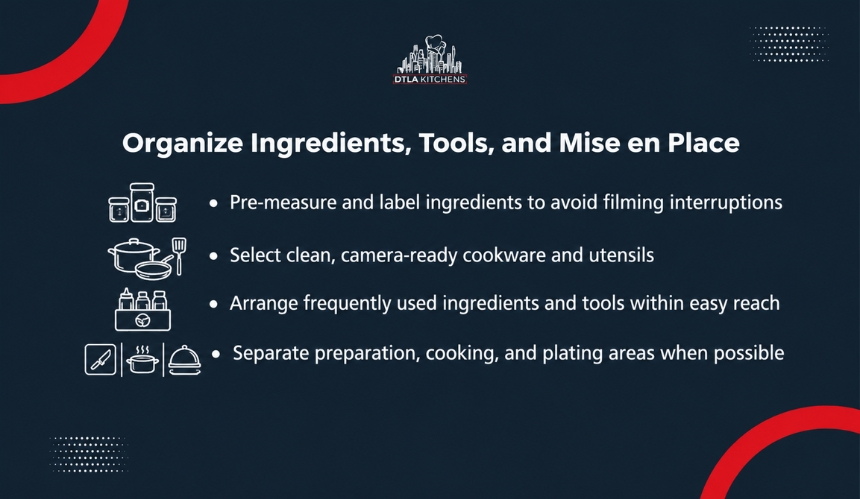
A well-structured mise en place reduces unnecessary movement and keeps the chef focused on the cooking action being filmed. Ingredients, utensils, cookware, and supporting equipment should be arranged around the actual execution sequence so the workstation remains efficient and visually controlled.
Pre-Measure and Label Ingredients
Ingredients should be portioned before filming so the chef can move directly from one step to the next without stopping to weigh, measure, or search for components. Clear containers also make it easier to verify quantities at a glance while keeping the preparation area organized for overhead shots and close-up footage.
Labels are especially useful when several similar ingredients are present, such as different flours, sugars, oils, sauces, or seasonings. Simple identification prevents ingredient swaps during fast-paced filming and helps assistants restore the workstation accurately between scenes without interrupting the chef.
Select Camera-Ready Cookware and Utensils
Cookware and utensils should be chosen for both functional performance and visual suitability. Pans, bowls, knives, cutting boards, and serving tools need to work reliably while avoiding excessive wear, stains, reflective glare, or distracting branding that may interfere with the composition of the shot.
The chef should also limit the station to tools that serve a defined purpose in the recipe. Removing unnecessary equipment creates cleaner sightlines for the camera, reduces clutter around the cooking surface, and gives the production team more flexibility when framing hands, ingredients, and cooking actions.
Arrange the Workstation Around the Recipe Workflow
The workstation should follow the order in which ingredients and tools will be used. Frequently handled items belong within immediate reach, while secondary equipment can be positioned outside the primary filming area until needed. This reduces cross-body movement and helps the chef maintain a controlled rhythm on camera.
Preparation, cooking, plating, and finished-food areas should remain physically distinct when space allows. Separating these functions prevents used utensils, raw ingredients, and production debris from entering presentation shots while preserving a clean surface for final assembly and visual detail work.
Coordinate With the Kitchen Studio and Production Team
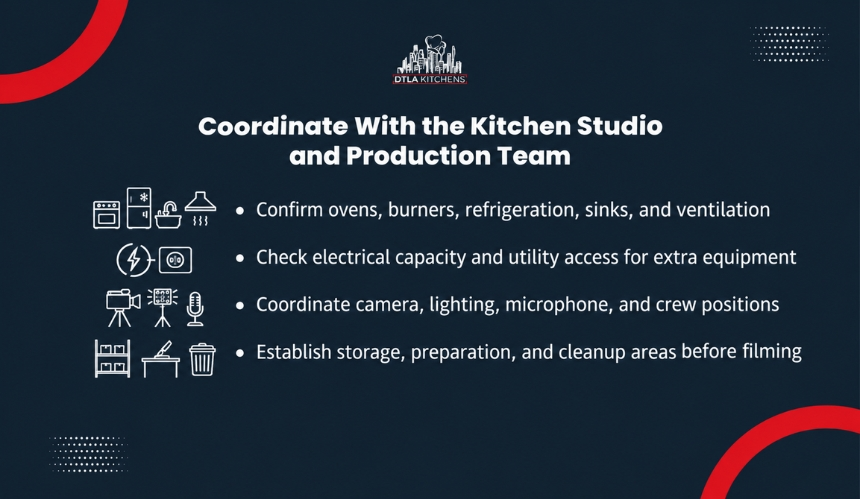
A filming day runs more smoothly when the chef’s cooking requirements are matched to the studio’s physical setup before production starts. Confirming utilities, equipment access, crew positioning, and support areas in advance reduces last-minute changes that can disrupt both cooking and filming.
Confirm Available Kitchen Equipment and Utilities
The chef should verify which appliances and utilities are available in the kitchen studio, including ovens, burners, refrigeration, sinks, ventilation, and any specialty equipment needed for the recipe. This prevents production delays caused by incompatible cookware, insufficient capacity, or missing appliances that the chef expected to use.
Electrical load, gas access, water availability, and ventilation requirements should also be checked when additional equipment is being brought in. A portable induction unit, high-powered blender, fryer, or countertop oven may affect power distribution, workspace allocation, or safety procedures inside the studio.
Discuss Camera, Lighting, and Audio Requirements
Camera placement can change how a chef moves through the kitchen, especially when multiple angles are being captured at the same time. The chef should understand where tripods, overhead rigs, lighting stands, microphones, and crew positions will be located so cooking movements can remain controlled and unobstructed.
Audio requirements also influence technique. Actions such as chopping, blending, frying, or running ventilation can create noise that competes with dialogue, so the chef and production team should decide when spoken segments will be recorded live and when cooking sounds need to be isolated or captured separately.
Confirm Storage, Prep, and Cleanup Areas
Storage and support areas should be assigned before filming so raw ingredients, backup dishes, finished components, and refrigerated items remain easy to access without crowding the active set. Clear staging zones reduce unnecessary traffic through the primary filming area and protect temperature-sensitive food from extended exposure.
Cleanup logistics matter for the same reason. Designating where used pans, utensils, packaging, and food waste will go keeps the working set functional throughout the shoot and prevents the chef from losing valuable prep space as production progresses.
Prepare for On-Camera Cooking and Food Continuity
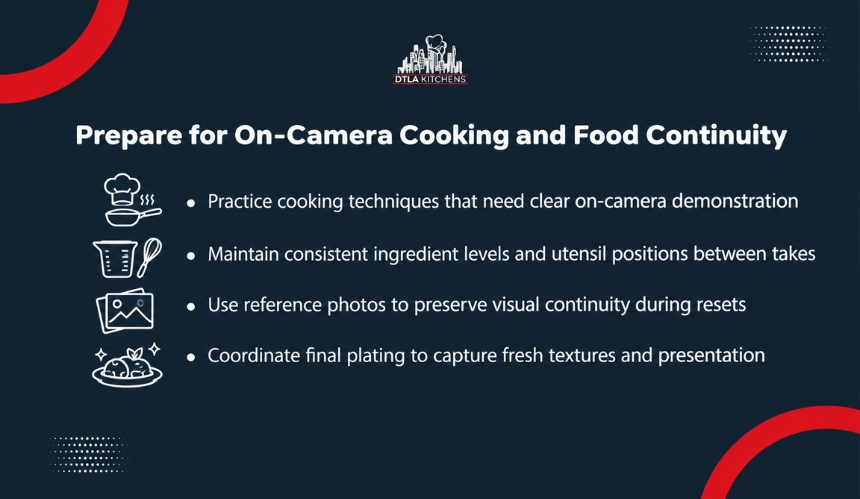
On-camera cooking requires the chef to control both culinary execution and visual consistency. Small changes in technique, ingredient placement, or plating can become obvious when footage from different takes is edited together.
Fact: Continuity errors in food filming can appear as changing garnish positions, different ingredient levels, altered browning, or shifted utensils between shots, making separate takes look visibly inconsistent when they are edited into one sequence.
Practice Key Cooking Demonstrations
Any technique that must be clearly visible on camera should be rehearsed before filming, especially knife work, sautéing, tossing, piping, folding, garnishing, or other actions that depend on precise hand movement. Practicing the demonstration helps the chef present the technique at a pace that remains natural while still giving the camera enough time to capture the critical motion.
The chef should also identify actions that may need to be slowed slightly, repeated from another angle, or paused at a visually useful point. This creates cleaner footage without changing the culinary method or making the demonstration feel staged.
Maintain Visual Continuity Between Takes
Continuity depends on keeping the visible state of the food, cookware, utensils, and workstation consistent from one take to the next. Ingredient levels, sauce placement, pan orientation, garnish position, and the degree of cooking should be monitored closely whenever a scene is repeated.
A simple continuity reference, such as a quick photo taken before resetting the shot, can help the chef and crew restore the exact arrangement. This is especially useful when multiple camera angles are filmed separately and later combined into a single sequence.
Plan Final Plating for Camera
Final plating should be designed for the camera angle rather than for table service alone. Garnishes, sauces, height, spacing, and color contrast should be arranged so the main elements remain clearly visible from the intended shooting position.
The finished dish should also be plated as close as possible to the moment it will be filmed. Steam, crisp textures, glossy sauces, fresh herbs, and other time-sensitive details can deteriorate quickly, so the chef should coordinate the final presentation with the camera team before completing the plate.
Follow a Day-of Filming Checklist
Day-of preparation should focus on verifying that the kitchen, personal setup, and production timing are ready before the first take. A controlled arrival routine reduces preventable delays and gives the chef time to correct problems before they affect the filming schedule.
Arrive Early and Test the Cooking Station
The chef should arrive with enough lead time to inspect the active cooking station before cameras begin rolling. Burners, ovens, refrigeration, sinks, small appliances, and temperature controls should be tested under actual operating conditions rather than assumed to be ready based on the studio setup.
This check also provides time to confirm that required ingredients and tools are physically present and positioned correctly. Discovering a faulty appliance, missing utensil, or temperature issue before filming starts is far less disruptive than stopping production after the first scene is underway.
Prepare Personal On-Camera Essentials
Chef clothing should be clean, comfortable, and compatible with the visual style of the production. Spare jackets, aprons, towels, and basic grooming items should be available in case spills, steam, sauces, or food handling affect appearance during the shoot.
Accessories should also be evaluated for practical interference. Jewelry, loose sleeves, reflective items, or anything that contacts a microphone can create safety, audio, or continuity problems, so the chef should keep the on-camera setup simple and consistent throughout filming.
Build Time for Retakes and Unexpected Delays
A filming schedule should include operational buffer rather than assuming every recipe stage will be captured on the first attempt. Camera adjustments, lighting changes, sound issues, food resets, and technical interruptions can extend individual scenes even when the cooking itself remains on schedule.
The chef should therefore avoid planning time-sensitive recipes back-to-back without recovery space. Building margin between critical stages protects food quality, prevents rushed execution, and gives the production team enough flexibility to resolve problems without compromising the remaining shoot.
Keep the Filming Day Efficient From First Take to Final Plate
Efficient kitchen studio production depends on maintaining control as the shoot progresses, not only preparing well at the start. Chefs should manage communication, food holding conditions, scene completion, and final quality checks so later stages do not lose time or visual consistency.
Keep Communication Clear During Production
The chef, director, producer, and food styling team should use clear cues for when cooking can begin, pause, or move to the next stage. This prevents a chef from starting a time-sensitive action before cameras, lighting, or sound are ready to capture it.
Communication also matters when production priorities change during the day. If a shot is removed, reordered, or extended, the chef needs that information immediately so ingredients, cooking times, and available portions can be adjusted without creating unnecessary food waste or production downtime.
Protect Food Quality and Safety During Extended Shoots
Long filming days can leave ingredients and prepared foods outside their intended holding conditions for longer than a normal service period. Refrigerated products, cooked proteins, dairy-based components, and other perishable foods should be returned to appropriate temperature-controlled storage whenever they are not actively required on set.
Chefs should also distinguish between food intended for consumption and food used only for visual production once handling conditions change. Keeping those categories controlled reduces cross-contamination risk and prevents visually acceptable food from being treated as safe to serve after extended exposure.
Track Completed Shots and Perform a Final Quality Check
As scenes are completed, the chef or production team should track which recipe stages have been successfully captured before ingredients or finished components are cleared. Confirming shot completion prevents the team from discovering later that a critical action or transition must be recreated after the food has already been discarded.
Before the final hero shot or closing footage, the chef should inspect the dish from the actual camera position. Surface moisture, sauce separation, wilted garnish, fingerprints, crumbs, or uneven placement may be minor at the workstation but highly visible in close-up footage, making a final visual check essential before production wraps.
Ready to make your next filming day smoother? DTLA Kitchens offers professional kitchen studio space and flexible commercial kitchen options for chefs, food brands, and production teams across Southern California. From recipe shoots to ongoing culinary operations, find a kitchen setup that fits your workflow and production needs.
Frequently Asked Questions
Ownership depends on the production agreement, not simply on who cooks the dish. In the U.S., a basic ingredient list is generally not copyrightable, while original written expression and recorded media may receive separate protection. Chefs should clarify recipe, footage, licensing, editing, and reuse rights in writing before filming.
Branded packaging should be treated as a deliberate production decision rather than incidental background. Commercial recipe shoots often plan product visibility, packaging shots, and brand callouts in advance. Chefs should identify sponsored ingredients, competing products, and required labels before filming so the producer can incorporate or exclude them consistently.
A food stylist becomes valuable when production involves advertising-level hero dishes, complex presentation, multiple visual variations, or intensive styling while the chef remains on camera. Simpler recipe content may not require one. The decision should reflect visual complexity, commercial expectations, shot volume, and whether styling responsibilities would distract from culinary performance.
Perishable ingredients should travel in insulated coolers or refrigerated transport and remain at 40°F or below until needed. USDA guidance limits unrefrigerated perishable food to two hours, or one hour above 90°F. Use thermometers where practical and keep raw proteins separated from ready-to-eat ingredients during transportation and staging.
Platform formats should be decided before cameras roll because framing requirements affect how cooking actions fit within the image. Vertical 9:16 footage requires different composition than 16:9 landscape video, particularly around hands, cookware, captions, and product placement. Planning multiple deliverables during production reduces damaging crops during post-production.
Recipes involving flambé, torches, unusual open flames, or substantial smoke should be disclosed to the studio before filming. Film-production rules may require additional fire controls or permits depending on jurisdiction and activity. Never disable alarms or suppression equipment. Confirm studio approval, ventilation, extinguishers, emergency procedures, and any permit requirements beforehand.
Ingredient and prop costs vary by production agreement rather than following one industry-wide rule. Some recipe-video studios include a fixed ingredient allowance, while premium proteins, specialty products, branded ingredients, or custom props may cost extra. Chefs should confirm purchasing responsibility, reimbursement limits, substitutions, and replacement-food charges before the production budget is finalized.